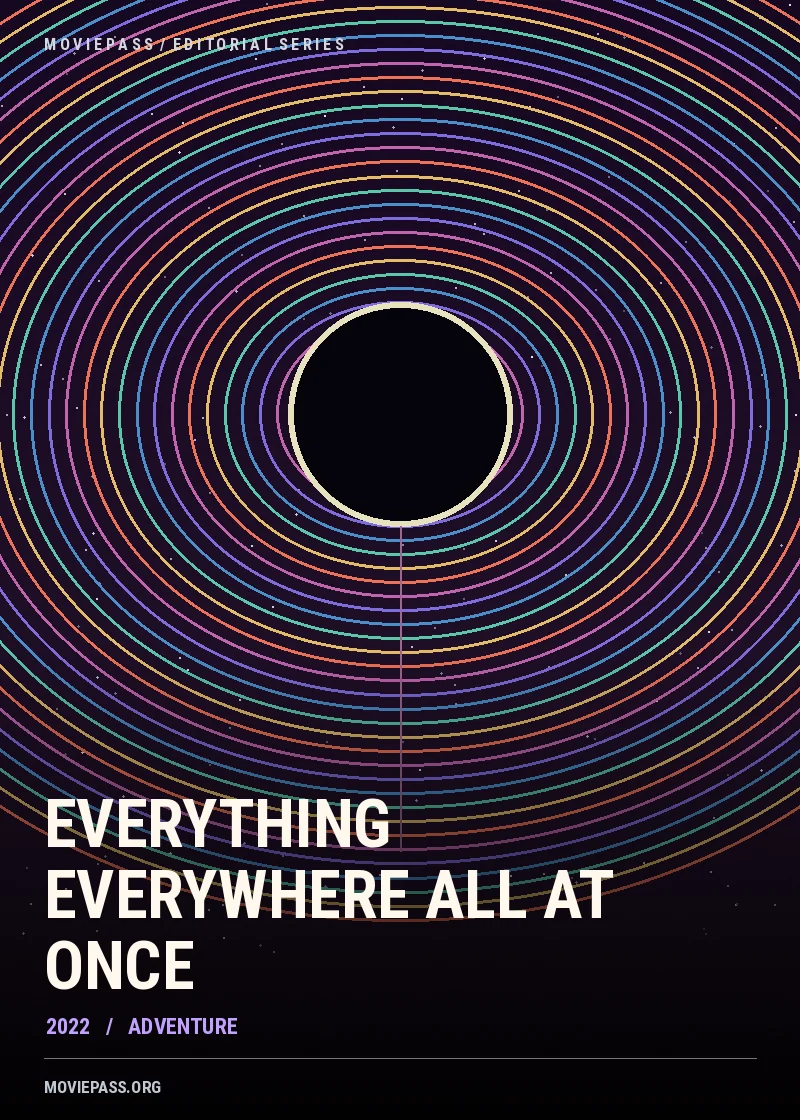
Maximalist, unruly, and unusually tender beneath its absurdist surface.
The review
The title is also a useful warning about the movie’s method. Everything Everywhere All at Once throws styles, tones, and competing possibilities into the frame until exhaustion becomes part of the experience. The surprising achievement is that its family story remains legible inside the commotion.
Michelle Yeoh gives the shifting realities an emotional anchor. A change in posture or attention can make a different version of the character understandable before the situation is explained. Ke Huy Quan brings a contrasting energy that helps the film test whether gentleness can be active rather than passive. Stephanie Hsu makes the generational conflict feel larger than a plot device.
Not every joke or detour will land for every viewer. The film embraces deliberately childish absurdity, abrupt tonal changes, and relentless visual movement. Someone seeking a restrained multiverse thriller is likely to find the style excessive. The excess is the point, but that does not make it a universal fit.
The most useful way in is to follow the emotional problem rather than try to catalog every alternate reality. Beneath the fragmentation is a question about where attention belongs. The movie’s best moments make a small act of care feel like a consequential choice in a world offering endless ways to look elsewhere.
A question to take into the film
Which detail in the staging or performance tells you something before the dialogue does?
Film facts: A24. The premise is paraphrased; the review and viewing question are original MoviePass.org editorial commentary. Selected cast is not a full credit list. Artwork is original editorial illustration.