An inventive, exuberant introduction to a hero whose uncertainty is part of his strength.
The review
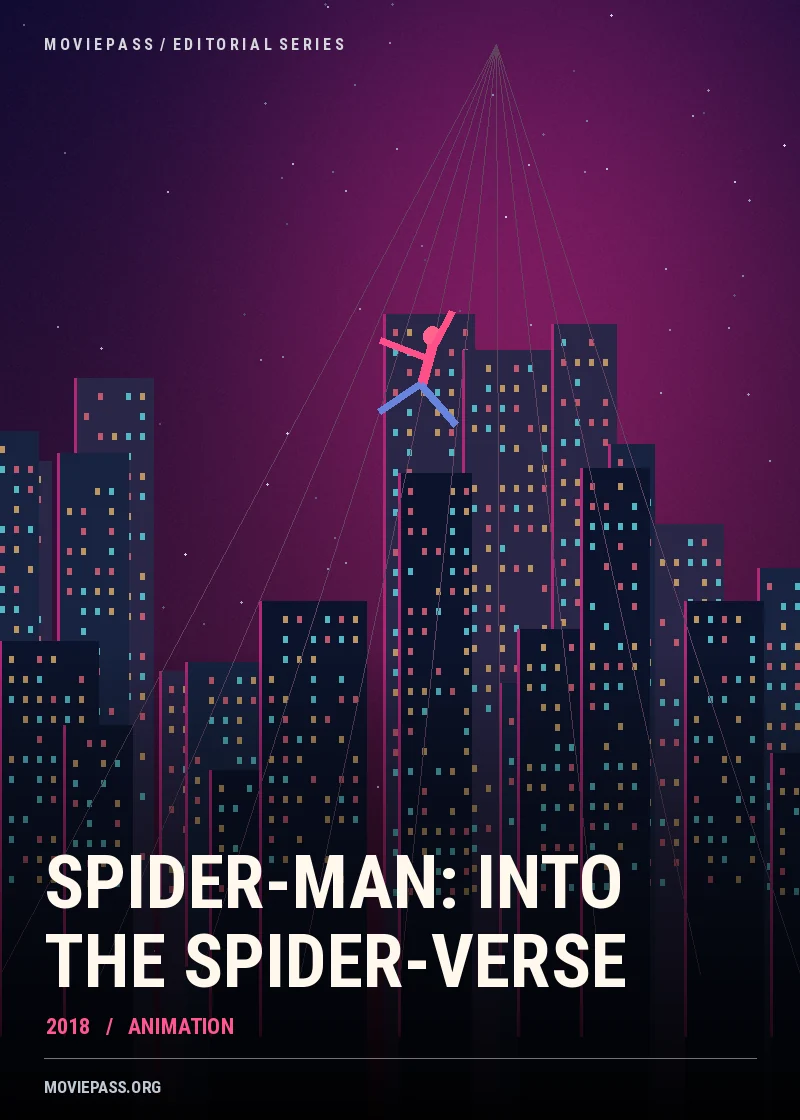
Into the Spider-Verse treats animation as a language with more than one accent. Graphic textures, changes in movement, and comic-book devices do not merely decorate the action. They let the movie show how Miles experiences a world that is suddenly moving faster than he can understand.
The most rewarding choice is to make awkwardness central. Miles is not compelling because he immediately knows what to do. He is compelling because he is trying to work out who he can become while still being someone’s son, someone’s nephew, and a teenager with his own creative life. That emotional grounding gives the crowded premise room to breathe.
The visual density asks for attention. Some sequences are intentionally busy, and viewers sensitive to rapidly changing or flashing imagery should investigate content guidance before watching. For everyone else, the variety is a source of humor and surprise rather than an obstacle to following the main character.
Look beyond the crossover mechanics and notice how the film distinguishes imitation from growth. Miles’s journey becomes most satisfying when it stops being about reproducing another person’s movements. The movie’s visual confidence reinforces its central invitation: a familiar story can become new when the person telling it discovers a different rhythm.
A question to take into the film
Which detail in the staging or performance tells you something before the dialogue does?
Film facts: Sony Pictures. The premise is paraphrased; the review and viewing question are original MoviePass.org editorial commentary. Selected cast is not a full credit list. Artwork is original editorial illustration.